
You arrive with a bag, a pair of damp shoes and something you need to take out again tomorrow. Each item needs somewhere to go. When those places are unclear, the space beside the door becomes a collection of unfinished decisions.
To reset a small entryway, keep the door and walking route clear, reserve a limited space for everyday shoes, separate wet footwear, and give keys, bags and outgoing items predictable places. Try the arrangement with things you already own before adding storage.
Aim for a setup you can use while carrying groceries or looking for your keys. The examples below illustrate ways to plan it around your own space.
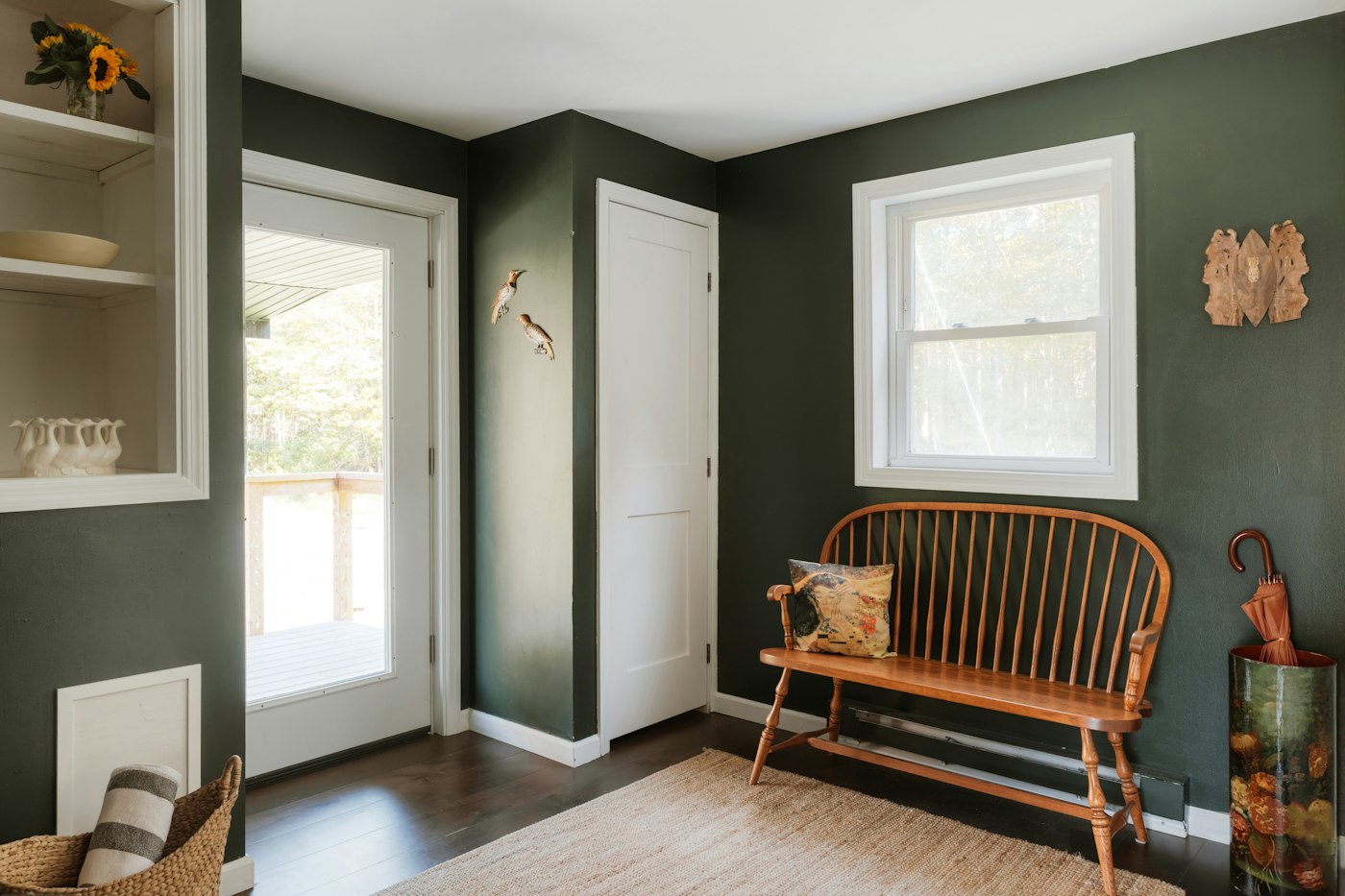
Start with the route through the door
Before moving a shelf or buying a bench, open the door through its usual full swing. Walk the route you actually take into the home. Consider the space occupied by a shoulder bag, hanging coats, another person or a mobility aid, as relevant to your household.
A piece of furniture can fit against a wall and still make that route awkward. Check the space with everyday items in place. An empty hook rail may look unobtrusive; a coat or bag hanging from it takes up more room.
Keep exits unobstructed. The Canadian Forces Fire Marshal’s home guidance advises arranging furniture so it does not block escape through doors or windows. Treat your walk-through as a way to notice obstructions, not a check of building or accessibility compliance.
Give everyday shoes a defined amount of space
Gather the shoes currently near the entrance and decide which pairs you expect to use over the next few days. Move occasional and off-season pairs to storage elsewhere. The entrance does not need to hold the whole collection.
For example, imagine two people have six pairs by the door, but only three are in regular use that week. Give those three pairs clear places. If a fourth pair arrives, decide whether it replaces one of them or belongs elsewhere. The numbers are simply an example; use your household’s needs and available space.
Test with the actual footwear. Tall boots, large trainers and heels need different amounts of room. Leave enough room to put a pair back without balancing it on another. A generous-looking rack is not useful if the shoes you wear will not sit comfortably on it.
Keep wet footwear separate from dry storage
Choose a place for wet shoes that stays outside the walking route. If you already own a suitable tray, check that it contains water and works with your floor surface. A mat should lie flat and stay in place. Check beneath either one and clean up collected water promptly.
The Canadian Centre for Occupational Health and Safety’s workplace housekeeping guidance emphasizes clear walking surfaces, prompt spill cleanup and properly secured mats. Those principles are useful here, but a particular tray or arrangement cannot guarantee that nobody will slip.
Allow footwear to dry according to its care instructions before returning it to dry storage. Mesh shelves have openings: they are not a substitute for a watertight place to catch dripping water.
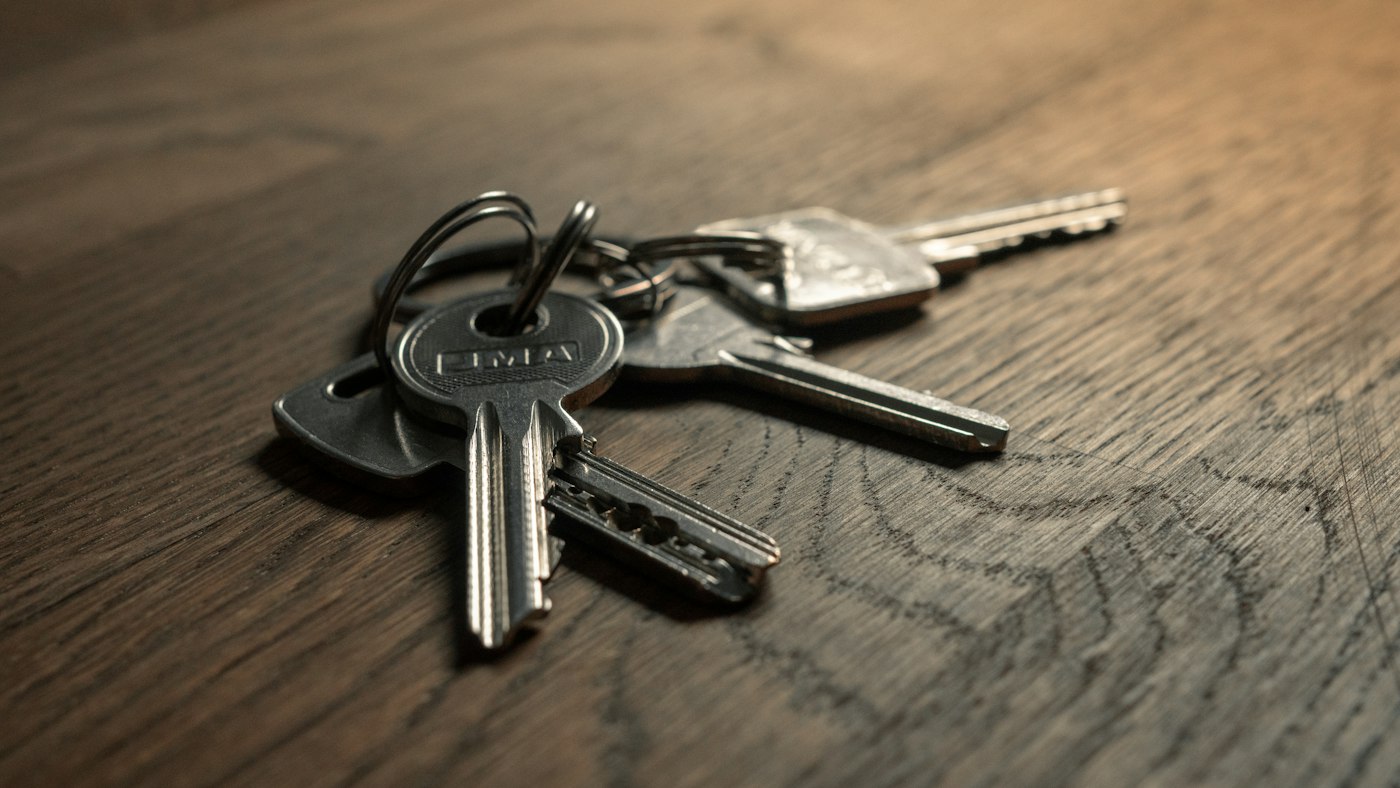
Give keys, bags and outgoing items their own places
Choose one consistent place for keys and other small daily essentials. An existing dish on a suitable shelf may be enough. Place it where it is easy for the people using it to reach, while keeping small items out of reach of young children if needed.
Give the bag you use most a place that does not obstruct movement. That might be an existing cupboard, a suitable hook or a shelf farther inside. Avoid making an entrance hook responsible for every bag you own.
Then reserve a small spot for things that are leaving: library books, a parcel or tomorrow’s tote. For example, put books due back tomorrow into the bag you will carry and place that bag in the outgoing spot. Once the errand is done, clear the spot again. It should not become permanent storage for things you might deal with someday.
This is the same useful question behind a workable bedside surface: what do you reach for here, and what can live somewhere else?
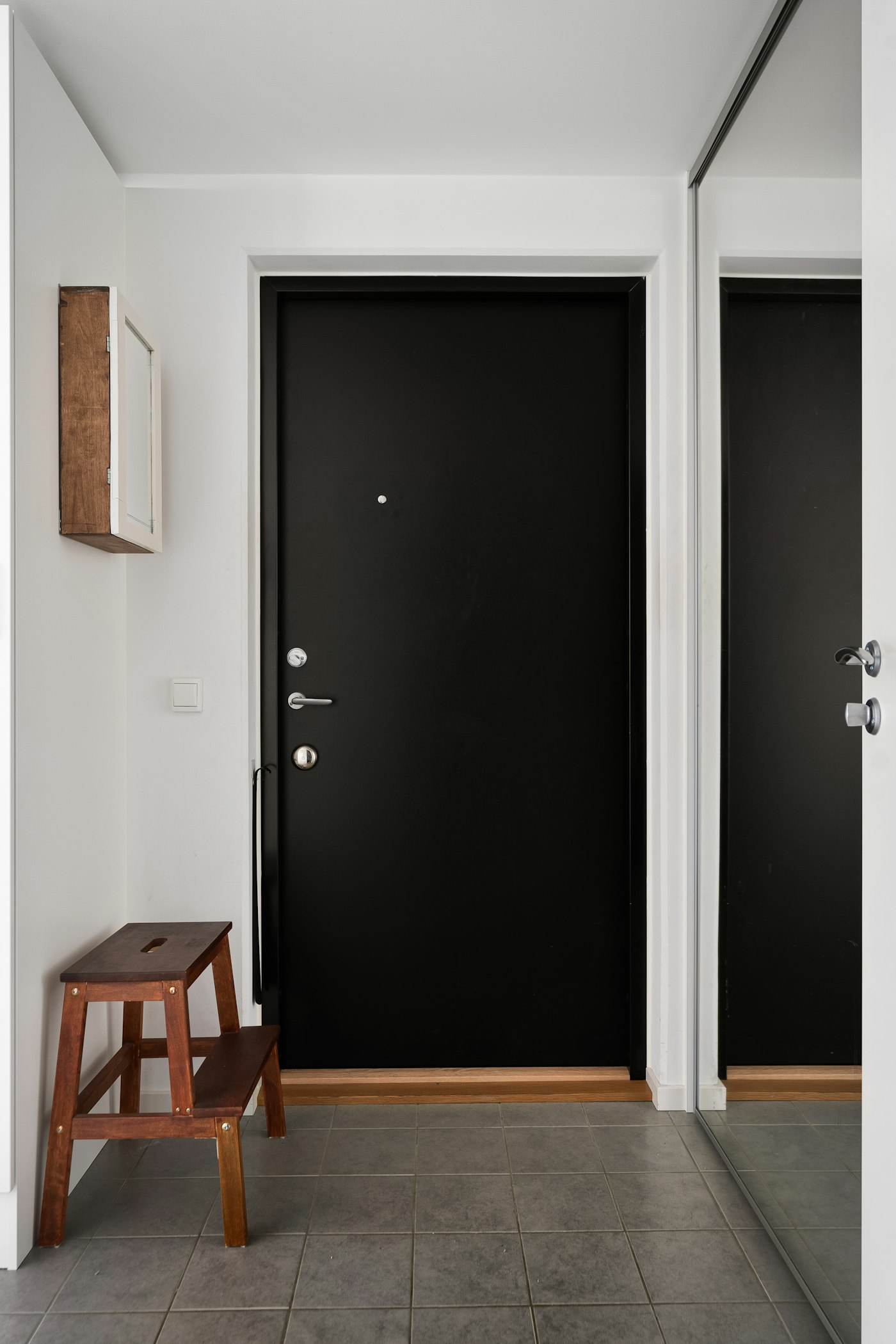
What if there is no hallway, or the hall is very narrow?
If the door opens straight into a living room, spread the routine across nearby places. Keys might go on an existing shelf while shoes live in a cupboard farther inside. There is no need to squeeze a console table beside the door simply to create an “entryway.”
In a narrow hall, start by reducing what stays there. Wall storage still needs room for its contents, and a shallow shelf can catch a bag or sleeve if it sits on the route. Check the arrangement when it is being used, not only when everything is empty.
If drilling is not permitted, work with existing cupboards, surfaces and storage before choosing a wall-mounted product. Check any mounting restrictions and follow the instructions for anything you install. Do not assume an adhesive substitute will safely carry an item designed for screws.
Try the arrangement before buying anything
Use the revised setup for a few ordinary arrivals and departures. Include a day when you bring something bulky home, if possible. Notice where you still hesitate, shift something out of the way or leave an item on the floor. That gives you a specific problem to solve.
- Does the door open normally, with the route clear?
- Can each person reach and return the items they use?
- Is there somewhere for wet shoes without moving them into the path?
- Does the outgoing spot get emptied after its contents leave?
Adjust the smallest thing that is not working. Perhaps two rarely worn pairs need moving, or the key dish belongs on a different shelf. For another room, our small-bedroom refresh guide takes the same approach of starting with existing belongings.
Two optional additions, if you still need storage
If the trial shows that you need a place to hang a few daily items or organize dry shoes, these are two options to examine. Check the selected variant, current measurements, mounting requirements and seller details before deciding. This guide draws on published information and does not report hands-on testing.
Affiliate disclosure: As an Amazon Associate I earn from qualifying purchases. Roswren may receive a commission if you buy through the Amazon links below.
Umbra Flip 5 wall hooks — Natural/Nickel
The selected Amazon listing is the five-hook Natural/Nickel version. The hooks fold back into the rail when unused. Umbra’s product information states a limit of 5 lb per hook and says mounting hardware and instructions are included.
This is a screw-mounted option. Follow the supplied instructions and use fixings appropriate to the wall; the stated hook limit does not make every wall or installation suitable. Before choosing it, consider the weight of a filled bag and the space that hanging items will occupy. It may suit a few light everyday items where mounting is permitted, but it does not solve an overcrowded passage by itself.
View the Umbra Flip 5 in Natural/Nickel on Amazon Canada (Affiliate link.)
Seville Classics 3-tier mesh shoe rack — Satin Pewter
The selected listing is the 3-Tier, Satin Pewter, Single Pack version. Its iron-mesh shelves provide open storage for dry shoes. Think about whether your usual footwear fits and whether the rack leaves the route usable.
Check the selected unit’s measurements before ordering. The retailer listing and Seville Classics’ Canadian three-tier product page show different dimensions and finish names. The manufacturer page calls its finish Silver. These pages do not establish that every similarly named version is identical, so confirm the measurements for the exact Satin Pewter unit you select.
The finish is described for dry environments. Keep dripping footwear in the separate place you chose for it: open mesh will not contain water. Buy a rack only if organizing the pairs you actually use still leaves a clear way through.
View the Seville Classics 3-tier rack in Satin Pewter on Amazon Canada (Affiliate link.)
Make the next arrival easier
Start with one small change you can keep: relocate the shoes you are not wearing, settle on a key spot or clear the route. After that, give each remaining item a place and see whether it returns there easily. A useful entrance is one you can move through and reset as part of an ordinary day.
Explore more practical home ideas in Roswren’s Living section.