
To plan five everyday outfits from clothes you already own, start with three combinations you enjoy wearing. Make a fourth by changing one layer, and a fifth by moving a familiar top into another outfit. Try the complete outfits, then save a note of what works—including a fallback for anything waiting to be washed, dried or repaired.
That is the idea behind our “three familiar outfits, two small changes” approach: a little experimenting with pieces already in your wardrobe. The aim is five usable options for your actual plans. They can be colourful, quiet, patterned or wonderfully repetitive. There is no shopping list to complete.
Start with the plans you have
Think of five occasions coming up when you will need to get dressed. They might include walking errands, working at a desk, visiting someone, heading out again another afternoon and meeting a friend in the evening. These need not fall on five consecutive days.
Note one practical detail for each occasion: a long walk, plenty of sitting, time outdoors, or a particular clothing requirement. Those details help you choose shoes and layers. For a workplace or venue, use its actual requirements. Then look at what is available to wear now; an outfit built around a shirt still on the drying rack needs a backup.
Choose three combinations you already like
Start with clothes you reach for together, rather than emptying the whole wardrobe. Perhaps that is trousers and a knit, a skirt and a shirt, or a dress with familiar shoes. Pull out three complete combinations, including footwear, and use them as your starting points.
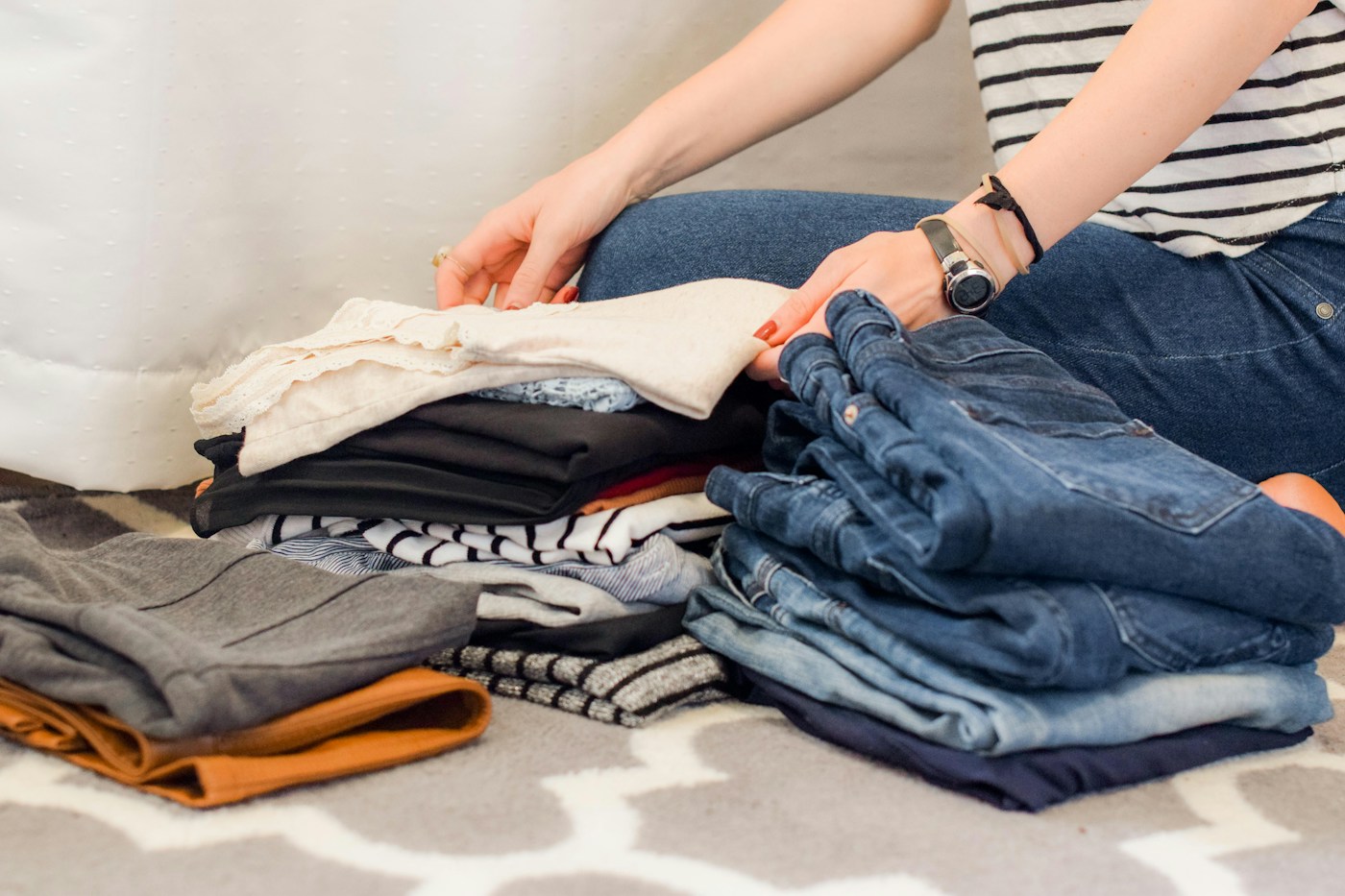
The examples below use one imaginary wardrobe so you can picture the changes. Your equivalent might be casual trousers instead of jeans, a skirt instead of navy trousers, or different comfortable shoes. Keep the idea behind the swap and use what you have. If there is no suitable equivalent, skip that combination and build from another favourite.
A dress can also be a starting outfit: keep the dress and shoes, then try a different layer you own. For a specific example, our guide to styling a chocolate-brown mini dress explores shoe-and-layer combinations.
Five everyday outfits to adapt
1. Walking errands: jeans, a T-shirt and an open shirt
Begin with blue jeans, a cream T-shirt and a pale-blue button-front shirt worn open. Add familiar trainers and the bag that carries what you need. The shirt supplies a layer you can remove; add outerwear to suit the conditions.
Try the bag with its usual contents and walk around in the complete outfit. Check that the strap sits comfortably and that you can take the shirt off without a wrestling match.
2. A desk or study day: navy trousers and a rust knit
Pair navy trousers with a rust-coloured knit and comfortable flats. Familiar trainers can take the flats’ place if they suit your day. Here, the knit brings the colour; you can keep the rest simple or combine it with another colour you like.
Check this outfit while seated, with your arms where they will be for typing or writing. Adjust the sleeves as you normally would. Keep the version that lets you settle into the activity comfortably.
3. A casual visit: jeans and the buttoned shirt
Wear the blue jeans with the pale-blue shirt buttoned as you prefer, plus comfortable flats and an existing coat if needed. The shirt that served as an open layer in outfit one is now the main top. Tuck it, leave it loose or try a partial tuck according to your preference.
For this check, sit down and reach forward. Notice whether the fastenings and sleeves feel comfortable in those positions. Choose the arrangement you want to wear, rather than keeping a tuck that needs constant attention.
4. Another outing: exchange the shirt for a cardigan
Return to outfit one’s blue jeans, cream T-shirt and trainers. Replace the open blue shirt with a burgundy cardigan, keeping the usual bag. That single change gives the familiar base a different colour and texture.
Check the cardigan over the T-shirt and under any coat you need: there should be room to move your arms comfortably. A jacket or overshirt you already own can play the same role. The useful experiment is changing one layer, whatever its colour or style.
5. A relaxed evening: move the shirt to the navy trousers
Keep outfit two’s navy trousers and shoes, but replace the rust knit with the pale-blue shirt from outfit three. Add a patterned scarf or familiar earrings if you already own them and feel like wearing them. The top has moved; the rest stays familiar.
Check the combination against the actual evening plan, including the shoes and outerwear. This swap does not automatically make an outfit formal. If the shirt is unavailable, the original trousers-and-knit combination remains an option.
Let your own colours join in
The cream, rust, navy and burgundy above make the examples easy to picture; they are choices, not a required palette. Hold an existing colourful layer against one outfit and see whether you like them together. A teal cardigan might be your favourite version. A patterned scarf might repeat a colour already in the shirt—or introduce a completely different one.
You do not need a neutral base, matching accessories or a new “accent piece”. Try your clothes together. Keep the colour experiment if it makes you want to wear the outfit; return to the familiar version if it does not.
Check readiness, then save the useful version
Give each complete outfit a final try with its shoes, bag and necessary outerwear. Walk, sit and reach; check that you can use the closures and any pockets you need. A promising arrangement on a hanger may need a different layer when everything is on.
Now check each garment’s condition. Note anything that needs washing, drying, ironing or repair before it is ready. Follow its care instructions: GINETEX’s care-label guidance explains that garment care takes finishes and components such as buttons and zips into account, as well as the textile. Use the instructions for the whole piece.
These are five outfit ideas, not a schedule for wearing the same clothes repeatedly without care. Choose from them according to the garments’ condition and availability. If a button needs attention or a shirt is drying, put an available fallback in the note.
Copy this short record for each outfit. A photo is optional; a written description works on its own.
- Situation: ___
- Clothes: ___
- Shoes, bag and outerwear: ___
- Ready now or needs attention: ___
- Available fallback: ___
For example: “Walking errands. Blue jeans, cream T-shirt, open pale-blue shirt. Familiar trainers, usual bag, coat chosen for the forecast. Shirt still drying. Today’s fallback: the same jeans, T-shirt, trainers and bag with the ready-to-wear burgundy cardigan; check it under the coat.”
Save the versions you actually like, including the repeats. For more ideas to adapt to your wardrobe, explore the Roswren Fashion archive.