
A small-bedroom refresh can start with clearing the routes you use, giving everyday belongings a place, and rearranging the textiles and lighting you already have. Before making a shopping list, decide what feels awkward about the room. Solving that specific problem gives your decorating choices a useful direction.
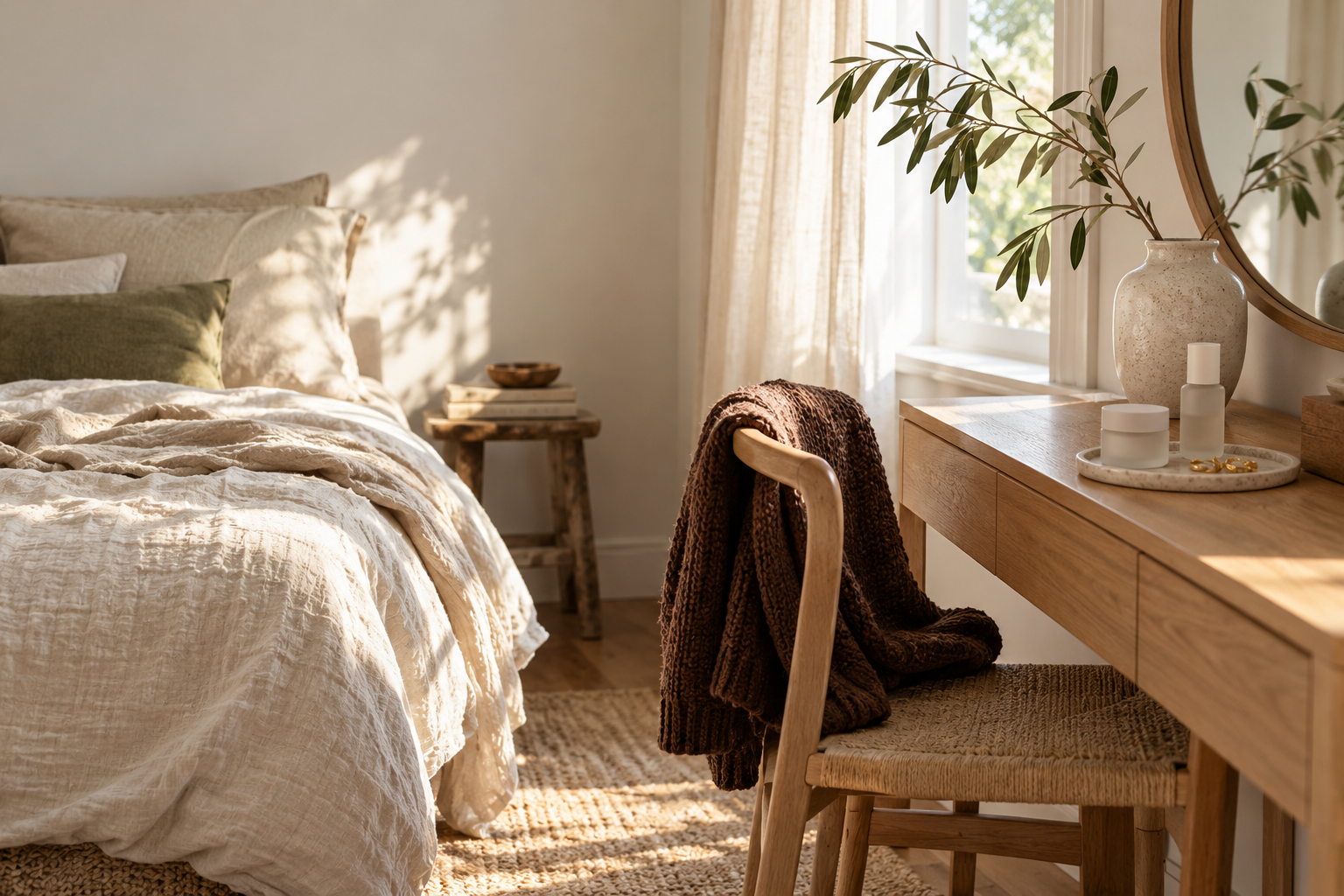
The plan below is an editorial approach to making a bedroom feel more considered. Adapt the colors, amount of decoration, and timing to your space.
Notice what interrupts your routine
Walk through the room as if you’re getting ready for bed. Can you reach the light switch? Does the wardrobe open fully? Where do tomorrow’s clothes land? Write down the three things that bother you most.
Be specific. “The room feels messy” might really mean laundry has no convenient destination. “The furniture looks wrong” might mean a chair blocks a drawer. Take a few photos from the doorway and bed so you can compare changes without relying on memory.
Make space before moving furniture
Return belongings that live elsewhere, put away clean laundry, and gather papers in one temporary sorting pile. You don’t need to finish a whole-house declutter to work on this room.
Then measure the furniture and the spaces around it. Include the room a drawer or door needs to open. Sketch possible arrangements on paper before lifting anything, and preserve clear access to exits, windows, and heating or ventilation equipment. Get help with heavy pieces.
If the current layout already works, keep it. A refresh can happen through what you see and reach each day.
Give small belongings a home
Gather spare boxes, baskets, or drawer dividers from around the house. Assign each one a job: charging cables, spare bedding, or accessories. Measure before choosing anything new, including the opening through which an under-bed container must slide.
IKEA’s small-bedroom guidance illustrates how under-bed storage and containers can organize belongings while leaving a few decorative objects visible. You can apply that idea with suitable storage you already own.
Keep frequently used things easiest to reach. A beautiful container becomes frustrating when you have to move three other objects to open it.
Pull together a familiar palette
Start with something staying in the room, such as a patterned duvet, a favorite print, or wood furniture. Choose one or two colors from it to repeat in existing cushions, a blanket, or bedside accessories.
For example, cream bedding, a blue throw, and a blue detail in artwork can create a visual connection. This is a styling option, not a requirement to make everything match. If saturated color feels restful to you, there’s no need to replace it with beige.
Check the room after dark
Try your existing lamps in different safe positions and see whether their light reaches where you read or get dressed. Keep cords out of walking routes and use bulbs compatible with each fixture’s instructions. Avoid buying a decorative lamp before checking its footprint and switch placement.
Make a short purchase list last
Live with the changes for several days. Then divide remaining ideas into “solves a problem” and “would be nice.” Set a spending cap and prioritize the first group.
Before buying, check:
- Is there something suitable elsewhere at home?
- Have I measured the space and access clearance?
- Will this be easy to use and clean?
- Does it solve one of the original three problems?
Stop when the room works comfortably for your routine. It doesn’t need a complete matching collection to feel finished.