
Choose sofa cushions by checking the available sitting space first, then building a small mix of colors and textures around your existing upholstery. A cushion arrangement should let you sit comfortably and use the room easily. Start with what you own and add only when you can name what’s missing.
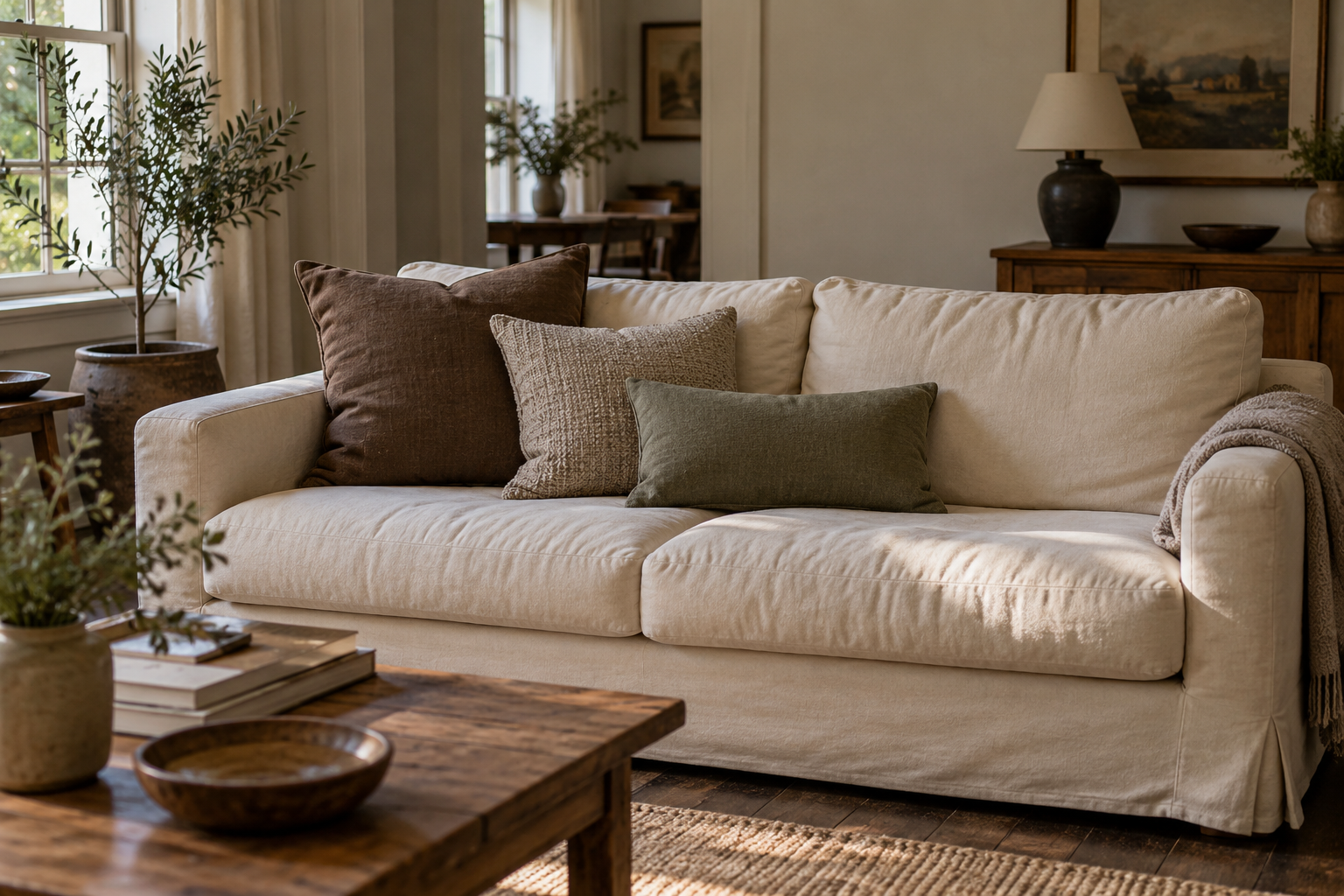
These are editorial styling suggestions. Sofa proportions, personal comfort, and how your household uses the furniture matter more than a fixed cushion count.
Test the size against the sofa
Measure the cushions you already have and photograph them on the sofa. Notice whether they disappear against a high back or push you forward on a shallow seat.
If you’re considering another size, cut a paper square to its dimensions and hold it against the backrest. It won’t show the cushion’s depth, but it helps you judge scale before ordering. Follow with a sitting test using your existing cushions or a folded blanket to approximate bulk.
Rainsford Company’s pillow styling guide suggests layering 22-inch squares behind 20-inch squares and smaller rectangular cushions. Treat that as one possible arrangement for a roomy sofa, rather than a universal sizing rule. A compact sofa may need fewer or smaller cushions.
Decide how many you actually use
Begin with one cushion at each end. Sit down, stretch out, and see whether anything feels missing. If you like support while reading, try a rectangular cushion where you sit most often.
You can add another layer for a fuller look, but leave usable seating. If cushions spend every evening on the floor, reduce the number or give the extras another home. Symmetrical pairs and relaxed mixed arrangements are both valid choices.
Borrow colors from the room
Look at your rug, curtains, artwork, and the undertone of your sofa. Choose a small palette you already enjoy. One straightforward option is a quiet base color with a more noticeable accent repeated elsewhere.
Possible starting points include:
- A beige sofa with cream, muted green, and a little rust
- A gray sofa with soft blue and warm ivory
- A colorful sofa with a similar shade plus one contrasting neutral
These combinations are examples, not shopping requirements. Bring a fabric sample home when possible, or compare existing textiles beside the sofa in daylight and evening light. Screen colors can be misleading.
Mix surfaces thoughtfully
Texture adds variety even when the colors are similar. Try a smooth cover beside a nubby weave, or a simple woven fabric beside something softly ribbed. Use covers that feel pleasant against skin if the cushions double as headrests.
Think about upkeep before choosing decorative details. Read the care label, check whether the cover is removable, and consider whether loops, tassels, or fringe suit your household. “Washable” is only useful if the washing instructions fit your routine.
Give patterns some breathing room
If you already have a patterned cushion you love, let it guide the others. A larger print can sit beside a smaller pattern and a solid color. Alternatively, keep all the covers plain and vary their textures.
You don’t need to introduce every pattern type. Photograph the arrangement from across the room; that distance often makes it easier to spot a color or print that feels disconnected.
Check the insert before replacing the cushion
A tired-looking cushion may need fluffing, a different cover, or an insert replacement rather than a complete new set. Measure carefully and follow the cover maker’s insert guidance. Automatically sizing up can make some covers overfilled or strain their seams.
Try the finished arrangement for a few evenings. Keep the pieces you reach for, remove the ones you repeatedly move, and let comfort help make the final decision.